> For the complete documentation index, see [llms.txt](https://docs.ecko.finance/eckodao/llms.txt). Markdown versions of documentation pages are available by appending `.md` to page URLs; this page is available as [Markdown](https://docs.ecko.finance/eckodao/eckogov/proposal-epoch/discourse-proposal-discussion.md).
# Discourse - Proposal Discussion
Discourse is a modern, open-source forum platform that provides a seamless environment for online proposal discussions. If you're new to Discourse, this guide will walk you through its key features and how to use them effectively.
### Getting Started with Discourse
To start using Discourse, you'll first need to register an account:
1. **Visit the eckoDAO Discourse:** The forum URL is
2. **Register:** Click on the 'Sign Up' button, located at the top right of the page.
3. **Fill out your details:** You'll need to provide a username, email address, and password. Some forums might also ask for additional information.
Once you've registered and logged in, you're ready to start participating in proposal discussion.
### Navigating Discourse
Discourse has a clean, intuitive interface:
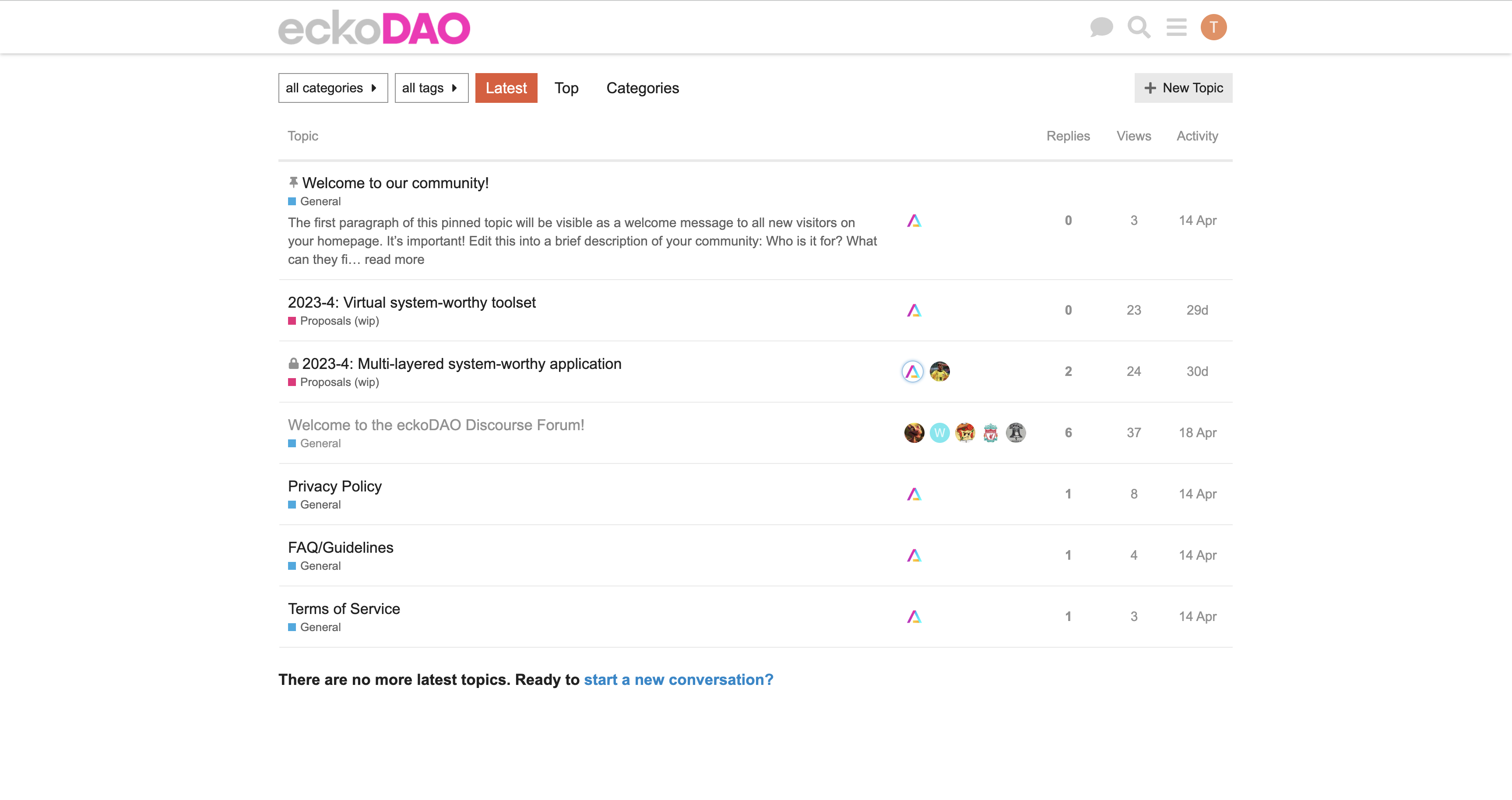
* The **homepage** displays a list of categories and recent discussions.
* At the top of the page, you'll find a **navigation bar** to switch between categories, latest posts, unread notifications, and more.
* The **magnifying glass icon** at the top right is for search.
* The **hamburger menu** next to it provides quick access to various pages like the FAQ, About page, and categories.
### Participating in Discussions
To join a discussion:
1. **Choose a category:** Click on a category that interests you from the homepage.
2. **Select a discussion:** Within the category, click on a discussion (also known as a thread or topic) that you want to participate in. A live proposal discussion can be determined by the category 'Proposals'
3. **Reply to a post:** To reply to a specific post, click the 'Reply' button under that post.
4. **Reply to the overall discussion:** To reply to the overall discussion, click the 'Reply' button at the very bottom of the page.
Remember to keep your posts respectful and on-topic.
### Creating a New Discussion
To start a new discussion:
1. **Click 'New Topic':** This is located at the top right of the home page.
2. **Write your post:** Give your discussion a title and write your post. You can format your text, add links, upload images, and even include polls using the options above the text box.
3. **Post your discussion:** Click 'Create Topic' when you're ready.
### Notifications and Settings
Discourse has a notification system to keep you updated on replies to your posts, mentions, and other important events. Click on your profile picture at the top right to access your notifications.
You can customize your notification settings in your profile. You can choose to be notified immediately, daily, weekly, or not at all about different types of events.